Modern data environments require unprecedented levels of bandwidth to keep pace with enterprise applications, high-definition video broadcasting, and growing network demands. Running individual fiber-optic strands for each distinct signal or network link quickly becomes logistically impractical and cost-prohibitive. To overcome these physical constraints, infrastructure architects rely on advanced optical technologies that maximize the capacity of existing dark fiber lines without requiring costly civil engineering projects.
Understanding how fiber multiplexers function—specifically through Coarse Wavelength Division Multiplexing (CWDM)—is essential for any organization seeking to improve network performance, reduce capital expenditure, and dynamically scale bandwidth.
How Fiber Multiplexers Maximize Existing Cable Infrastructure
At its core, wavelength division multiplexing works by assigning different signals to specific wavelengths (colors) across the optical spectrum. By doing so, optical fiber multiplexers can aggregate multiple independent data streams and transmit them simultaneously down a single fiber strand.
Instead of laying up to 16 separate physical fiber lines or paying recurring monthly fees to lease additional dark fiber from service providers, a multiplexer consolidates those channels into a single optical line. At the receiving end of the link, a matching optical demultiplexer separates the light signals back into their original distinct wavelengths, directing each channel via short patch cables to its intended destination hardware.
This consolidation delivers immediate, significant cost savings on installation labor and ongoing leased-line expenses while dramatically simplifying physical cable management inside server racks and broadcast environments.
Passive Operation and Unmatched Protocol Flexibility
One of the greatest operational advantages of modern passive fiber multiplexers is their zero-power design. Because these units use passive optical components, such as thin-film filters, to split and combine wavelengths, they require no external power to operate. This eliminates power draw in equipment racks, lowers thermal output, and minimizes potential failure points, yielding exceptional long-term reliability.
Furthermore, passive wavelength division systems are completely protocol-transparent and speed-agnostic. They do not inspect or alter the underlying packet data, allowing them to simultaneously carry completely different signal protocols—such as Ethernet, T1/E1, serial signals, and uncompressed digital video—across the exact same optical fiber.
Data rates are equally flexible. Enterprise networks can combine multiple gigabit links alongside high-speed 10 Gigabit Ethernet signals. For instance, combining sixteen 10 Gbps links over a single fiber pair yields a staggering total throughput of up to 160 Gbps without introducing digital latency. Network operators can also integrate Add-Drop Multiplexers (OADMs) along a long-distance fiber run, enabling individual wavelengths to be dropped off or added at intermediate physical locations without interrupting the remaining traffic.
Crucial Compatibility and Deployment Considerations
While integrating optical multiplexers into a network layout is straightforward, proper planning is required regarding transceiver compatibility. Because the multiplexer routes signals based on specific optical wavelengths, all connected transceivers—such as SFP or SFP+ optics—must match the precise CWDM wavelengths corresponding to the designated ports on the multiplexing unit.
Proper optical power budgeting is another key consideration. While passive optical hardware is highly efficient, each optical connection, filter pass, and patch point introduces minor attenuation. Ensuring that the transmitting optics deliver sufficient optical power to compensate for channel insertion loss guarantees long-term stability and clean signal integrity over long distances.
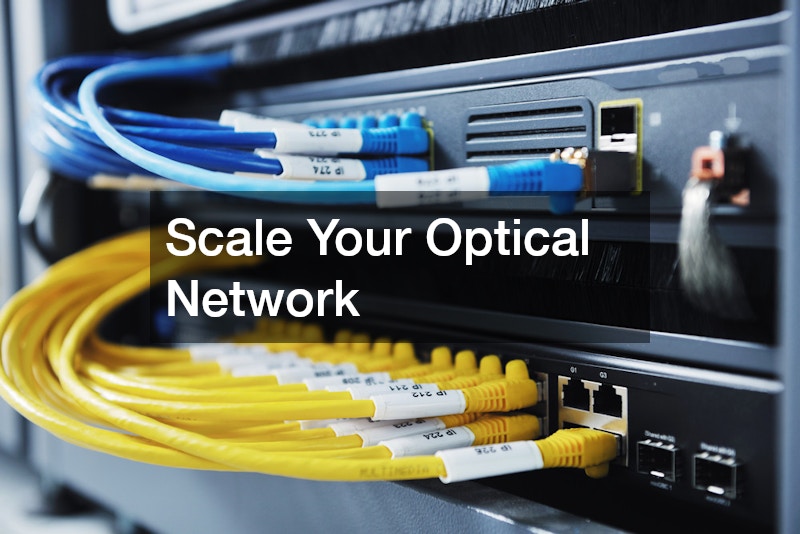
Scale Your Optical Network
When expanding your signal capacity, relying on proven, broadcast-grade optical engineering makes all the difference. MultiDyne provides industry-leading optical transport solutions, custom-engineered fiber multiplexers, and high-density signal distribution platforms designed to handle demanding enterprise and broadcast workloads with zero compromise.
Ready to eliminate bandwidth bottlenecks and drastically reduce your fiber deployment costs? Visit MultiDyne today to explore our full line of signal transport solutions and consult with an optical networking specialist.